
The Infinite Scroll
And the Void it Promised to Fill

THE REACH
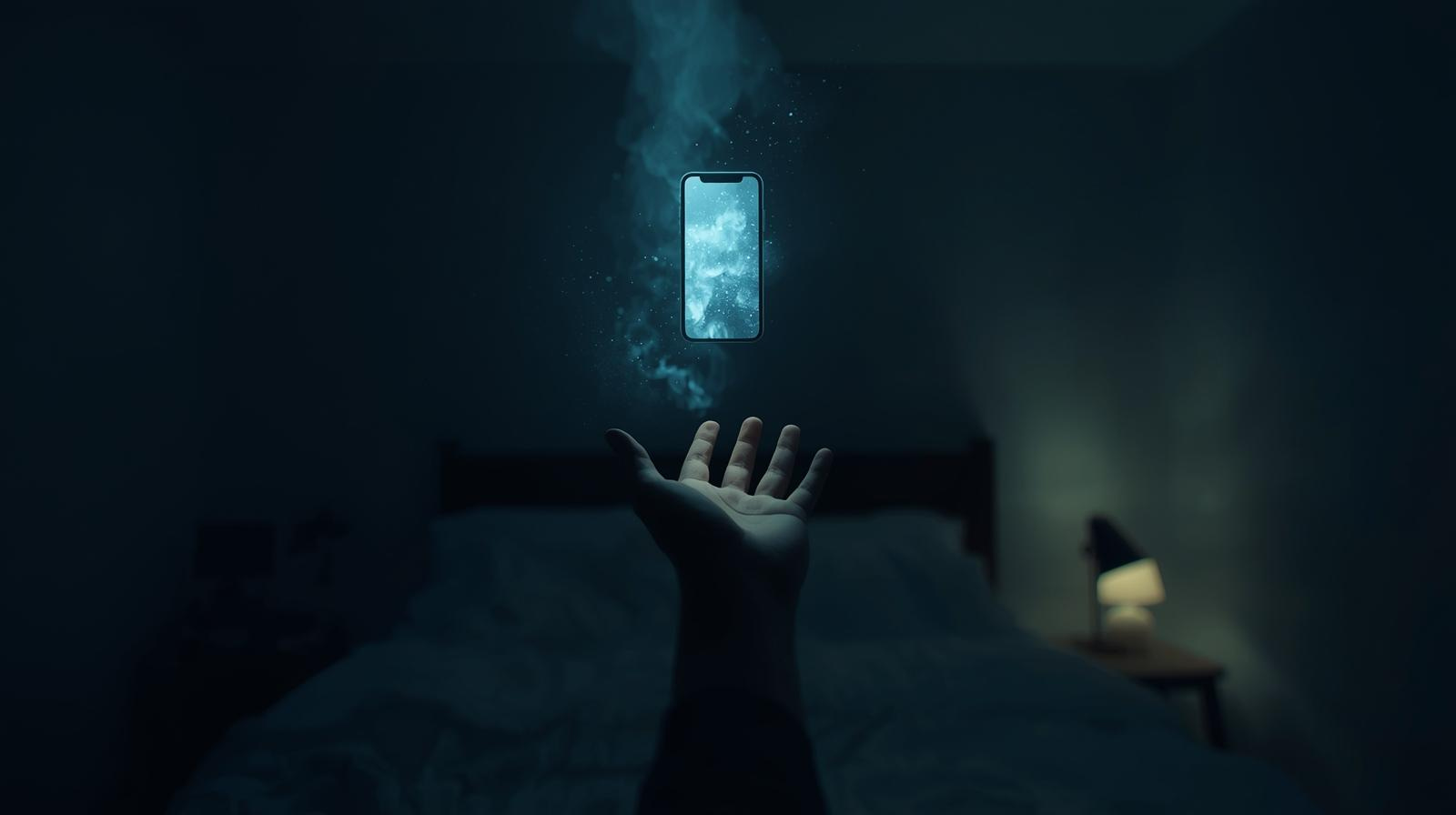
The hand knows before the mind does.
It’s already moving—sliding across the nightstand, fishing in the pocket, reaching for the phantom rectangle like a divining rod convinced there’s water somewhere in this desert. The thumb wakes up. The screen blooms. And for a half-second, there’s something that almost feels like hope.
This is the reach. The most repeated gesture of our species. More common than prayer. More reflexive than blinking. Somewhere between the first iPhone and now, we trained ourselves to believe that a four-inch piece of glass contains something essential. Something we need. Something that will finally make us feel like we’ve arrived.
I’ve done it ten thousand times. So have you. The gesture has become so automatic it barely registers as choice anymore. It’s more like breathing, except breathing keeps you alive and this… this just keeps you busy. Occupied. Scrolling through the wreckage of everyone else’s curated existence while your own life waits patiently in the next room, wondering when you’ll come back.
There’s an itch that has no location. Not in the skin, somewhere beneath it. A mosquito bite on the soul. And the only thing that scratches it, temporarily, insufficiently, is the scroll. We don’t reach for the phone because we want to. We reach because the itch has become unbearable and we’ve forgotten there was ever another way to scratch.
This is what they trained us for. Not through conspiracy, through design. Every notification was a pellet. Every like was a lever. We became the rats, and the Skinner box fits in our pocket now. We carry our own cage everywhere we go and call it convenience. We call it connection. We call it staying informed, staying relevant, staying in touch—as if touch were something that could happen through glass.
The reach happens in the gaps. The elevator. The checkout line. The thirty seconds between activities that used to just be... thirty seconds. We’ve strip-mined our own boredom. We’ve colonized every pause with content. And now silence feels like a threat—a void the hand must fill before the mind has to feel it.
I used to think boredom was a bug. Turns out it was a feature. Boredom was the space where ideas germinated, where creativity stretched its legs, where the mind wandered into territories it would never find on a map. But we paved over that wilderness. We filled it with infinite content and called it progress. Now the idea of sitting alone with our thoughts for five minutes feels like a punishment. A detox. Something that requires a retreat and a payment plan.
Beneath every scroll is a prayer we don’t know how to say anymore. A hope that someone, somewhere, posted something that will make us feel less alone. That in the river of content, there’s a message with our name on it. That the void has finally gotten around to acknowledging our existence.
But the void is a terrible correspondent. It sends memes instead of meaning. It offers engagement instead of intimacy. And we keep checking anyway, like refreshing an inbox for a letter that was never sent. Like knocking on a door that was never a door. Just a wall painted to look like one.
The hunger underneath all this isn’t complicated. It’s ancient. It’s the same hunger that made us gather around fires and tell stories until the stars got bored and went to sleep. The need to be witnessed. To matter. To feel, even briefly, that our existence leaves a mark on something other than an algorithm’s engagement metrics.
The tragedy isn’t that we reach. The tragedy is that the hunger is real and the food is fake. We’re starving at a banquet of pixels, stuffing ourselves with content that has no calories, wondering why we never feel full. The phone promised to connect us to everything. It delivered everything except connection.
And still, we reach.
Because the itch. Because the hope. Because we forgot what we were looking for somewhere around 2014 and the hand just kept moving. Muscle memory for a meaning that never materialized. Reflex without reward. The most performed prayer of our generation, offered to a god that only knows how to sell us things.
The reach is the easy part.
The scroll is where it gets weird.
THE SCROLL
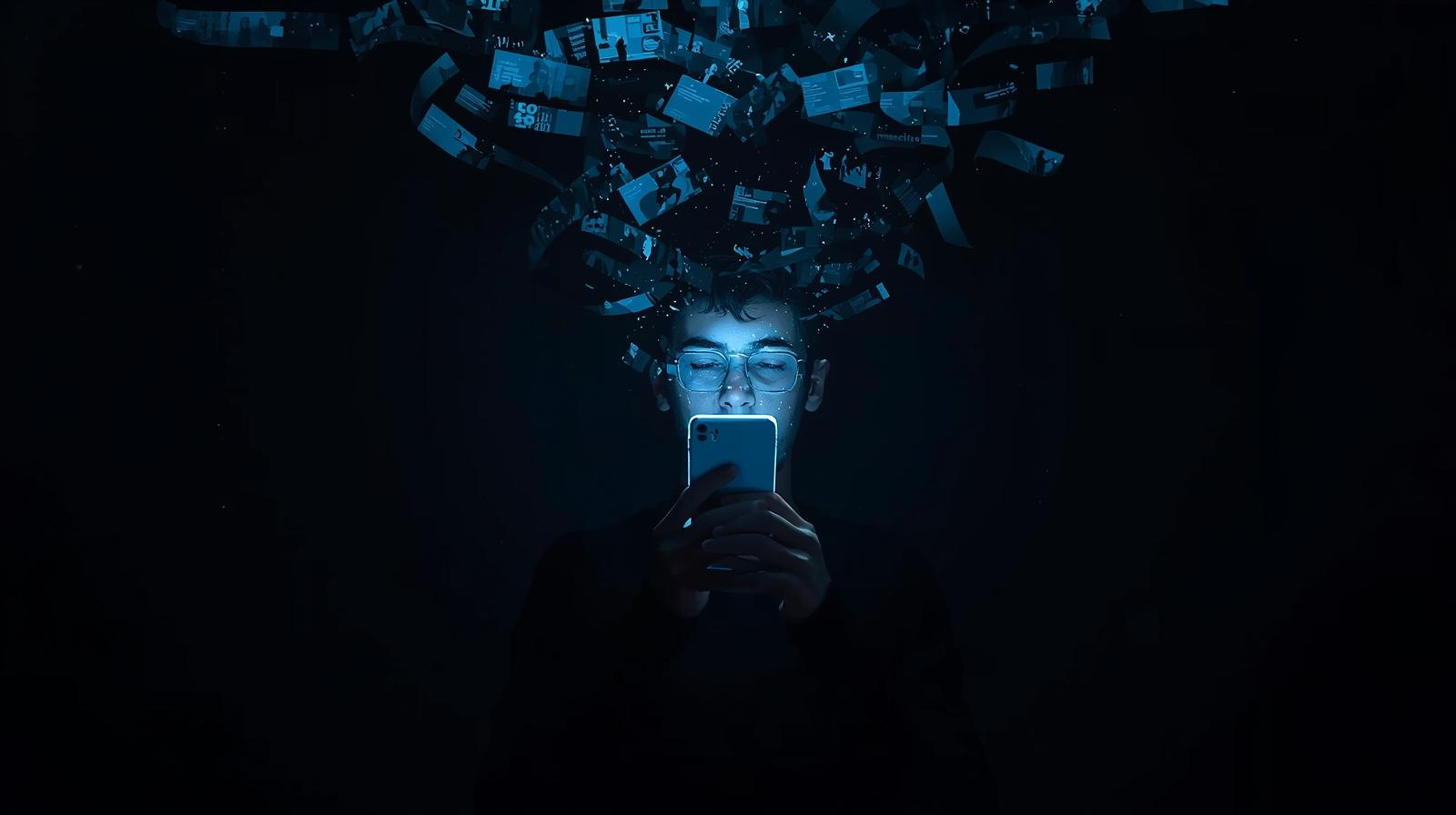
The first scroll is the gateway drug. A gentle flick. A casual glance. “I’ll just check real quick.” But there is no quick. There is no check. There is only the descent. That slow, warm slide into the algorithmic jacuzzi where time dissolves and intention goes to die.
You came here for a reason. You’re certain of it. Something specific. A message, maybe. A piece of information. A single task that would take thirty seconds if the app had any interest in letting you complete it. But the feed doesn’t care about your reasons. The feed has other plans. The feed is a slot machine wearing the skin of a newspaper, and you just put your quarter in.
Pull.
Somewhere in a server farm, an algorithm just smiled. It knows you. Not your name, your patterns. It knows you’ll pause on dogs and outrage and anything that confirms what you already believe. It knows you can’t resist a good tragedy or a bad take. It knows exactly how long to show you something satisfying before slipping in something irritating, because irritation is engagement and engagement is the only god this temple serves.
The content isn’t random. It’s a playlist for your particular nervous system, curated by a machine that studied your attention like a jeweler studies a diamond—looking for the fractures, the weak points, the places it can crack you open. And it’s good at its job. Better than you are at resisting. You came here with a plan. The algorithm came with a strategy. Guess who wins.
A war crime. A smoothie recipe. Someone’s dead grandmother. A life hack involving tennis balls. The worst take you’ve ever seen about a topic you didn’t know you cared about until rage seized your chest like a personal insult. An ad for sneakers. A dog who can skateboard. Breaking news that will be irrelevant by tomorrow but feels urgent enough to ruin your nervous system today.
This is the texture of the scroll. Everything is the same size. Everything is the same weight. Genocide and golden retrievers, side by side, each demanding two seconds of attention before the thumb decides their fate. The feed doesn’t hierarchize. It doesn’t prioritize. It just serves, relentlessly, until your capacity for feeling anything becomes a smooth, flat line.
I watched a video of someone’s wedding proposal yesterday. Then a clip of a building collapsing. Then a recipe for overnight oats. Then footage from a protest in a country I couldn’t place on a map. Then a comedian I’ve never heard of making a joke about therapy. Then an ad for medication to treat the anxiety I developed from consuming all this content.
The algorithm knows I’ll stay for the therapy jokes. It knows I’ll watch the building twice. It knows the wedding proposal hits different when I’m lonely and the overnight oats seem achievable when I’m avoiding something harder. It has mapped my emotional topography with the precision of a cartographer and the ethics of a casino. And I keep feeding it data with every pause, every scroll, every moment of lingering that teaches it exactly how to keep me trapped.
Time works differently in the scroll. It stretches and collapses simultaneously. You look up and an hour has passed, but you can’t account for it. It didn’t register as experience. It registered as... nothing. A gap in the record. A blank space where your life used to be.
You consumed something. You must have. Your thumb was moving. Your eyes were tracking. But if someone asked you what you saw, you’d stammer. You’d list fragments. A dog, maybe. Something about politics. A person you used to know got married or pregnant or promoted—the details already dissolving like sugar in rain. You’d realize with slow horror that you just exchanged an hour of your finite existence for a handful of images you can’t even remember.
This is the trade we make. Time for content. Attention for engagement. Life for scroll. And somehow the math never works out. Somehow we always end up in debt.
The scroll state isn’t sleep and it isn’t waking. It’s a third thing—a liminal nowhere that the body recognizes even if the mind refuses to name it. A trance state engineered for maximum stickiness and minimum nourishment. You’re not resting. You’re not working. You’re not connecting. You’re just... there. Hovering in the gap between intention and action, while the feed keeps feeding and the clock keeps bleeding minutes into the void.
I’ve tried to describe it to people who don’t scroll. They don’t exist, but I’ve tried. It’s like explaining water to a fish. We’re all so deep in it, we’ve forgotten what dry feels like. The scroll has become the texture of modern consciousness. The background hum, the default state, the place we go when we don’t know where to go. Which is most of the time. Which is always.
You put the phone down. Or you don’t. It just goes dark because even the battery has boundaries you don’t. And now you’re back. In your body. In your room. In your life. Except something’s off.
There’s a residue. Not from anything specific, from everything general. A film of vague dread. A low-grade sense that something important is happening somewhere else and you’re missing it. Even though you just spent an hour watching everything happen everywhere. Especially because of that.
The scroll promised to fill the void. Instead, it took careful measurements and expanded it.
And so we surface. Glazed. Emptied. Holding a device that’s still warm from our attention, wondering what the hell just happened and why we feel like we need a shower.
We went looking for something. We found everything. And everything, it turns out, adds up to less than nothing.
The scroll delivered exactly what it promised: infinite content.
What it didn’t mention is that infinity is just another word for never enough.
THE RETURN
Here’s the situation, if you zoom out far enough to find it funny: eight billion people, all staring at their hands, looking for something they already have.
Looking for presence in a machine designed to prevent it. Looking for connection in an architecture built on isolation. Looking for meaning in a void that’s carefully engineered to feel meaningful without delivering any.
It’s a prank. A cosmic prank. And we’re not the audience, we’re the punchline. Somewhere, the universe is watching us scroll through each other’s highlight reels, searching for the feeling of being alive, while actual life sits next to us on the couch wondering why we stopped making eye contact.
I’ve spent years of my life doom-scrolling through the apocalypse like it was a spectator sport. Every crisis, every catastrophe, every fracture in the social fabric—I watched it all from the comfort of my couch, convinced that bearing witness through a screen was the same as being present. It wasn’t. It was just consumption with a conscience. Tragedy tourism with better Wi-Fi.
It’s the need to be witnessed. To matter to someone. To feel, even briefly, that our existence leaves a mark.
The phone can’t give us that. It can simulate it—with likes, with comments, with the dopamine theater of engagement. But the body knows the difference. The nervous system isn’t fooled. Something in us keeps starving no matter how much content we consume, because content isn’t food. It’s a picture of food. And we’re still hungry.
Real presence is inconvenient. It doesn’t come with a notification. It doesn’t have a highlight reel. It’s the awkward pause before someone tells you the truth. It’s the meal that went cold because the conversation got interesting. It’s the walk that took twice as long because you stopped to look at something ordinary together and somehow it became sacred.
I had a conversation last week that lasted four hours. No agenda. No topic. Just two humans in a room, letting words find their own way to meaning. At some point, my phone buzzed in my pocket. I didn’t check it. I’m not sure I’ve ever said that before. I’m not sure I knew I was capable of it.
That conversation fed me in ways the scroll never has. It left a residue, too. But a different kind. Not the vague dread. Something warmer. Something that felt like being real for a moment. Being witnessed by someone who wasn’t also scrolling.
None of this scales. None of this trends. None of this can be captured, optimized, or fed to an algorithm. And that’s exactly why it works. The things that actually fill us are the things the attention economy can’t touch. Not because they’re hidden, but because they’re worthless by its metrics. Love doesn’t monetize. Presence doesn’t engage. Being here, actually here, is the one thing the machine can’t sell us because it requires the one thing the machine needs us to never do: put the phone down.
There’s no cure for this. The itch isn’t going away. The architecture is too total, the conditioning too deep, the dopamine pathways too well-grooved. We’re not going to defeat the scroll with willpower. We’re not going to transcend the attention economy with a meditation app—which is, let’s be honest, just more screen time in a robe.
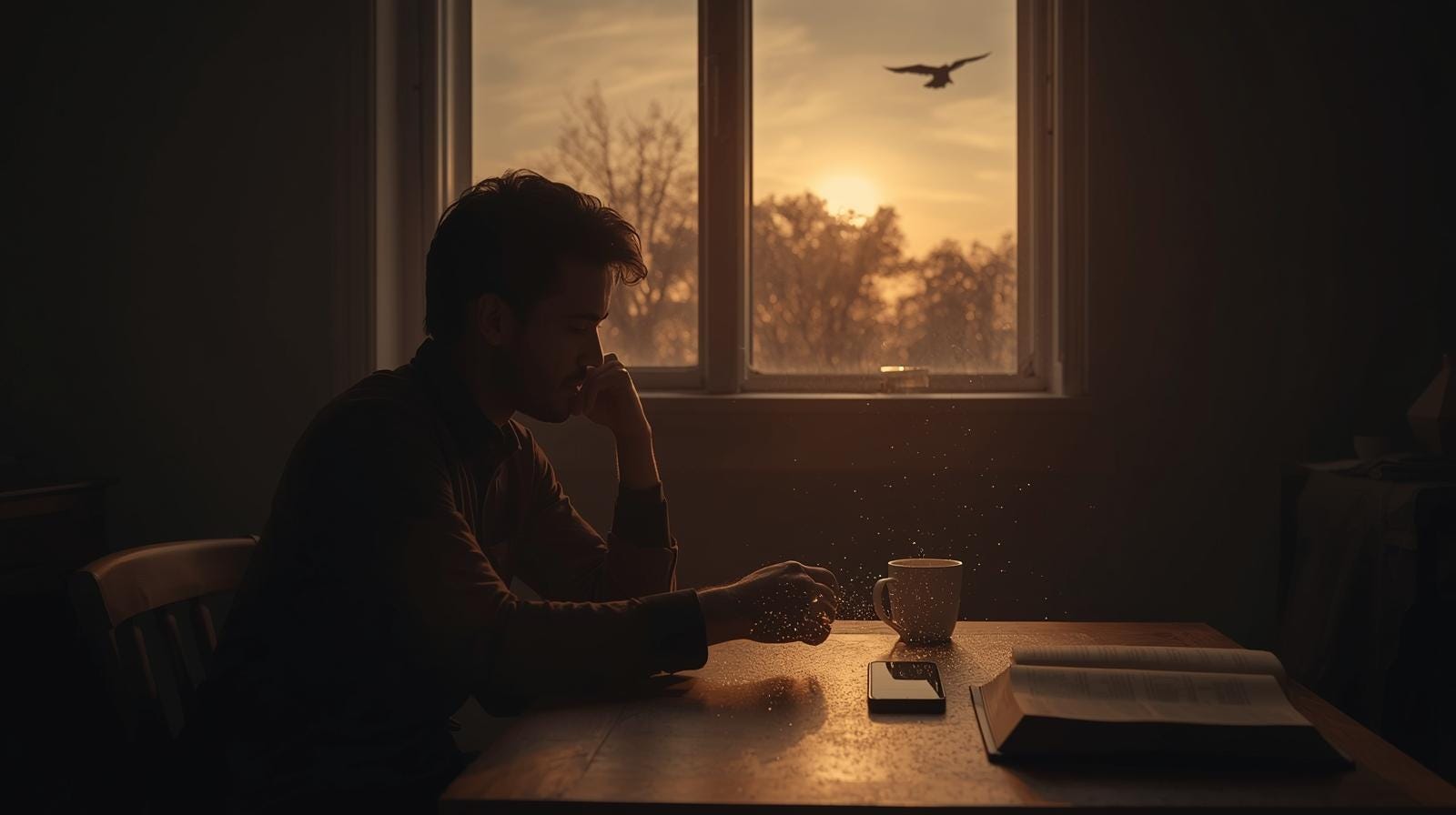
But we can notice. We can catch ourselves mid-reach and ask, with genuine curiosity: what am I actually looking for? And sometimes—not always, not even often, but sometimes—we can choose the other thing. The window instead of the screen. The person instead of the feed. The boring, beautiful, unoptimized moment that won’t perform for anyone but might actually be the whole point.
This is the practice. Not quitting. Not optimizing. Not turning our resistance into another productivity hack. Just noticing. Just asking. Just being willing, every now and then, to choose the unscrollable.
The joke, when you finally get it, is almost too simple to be funny. We spent years scrolling through an infinite feed, searching for the feeling of being alive, while actual life waited patiently for us to look up. The void didn’t have what we needed. It never did. It was just very, very good at pretending it might.
What we wanted was here the whole time. In the room. In the body. In the person we keep ignoring to check if anyone more interesting needs us. The algorithm can’t find it for us because it doesn’t live in the algorithm. It lives in the gaps the algorithm was designed to fill. It lives in the boredom we’ve strip-mined. It lives in the silence we’ve colonized with content.
It lives wherever we’re not looking.
Which, ironically, is exactly where we should start.
So here’s the invitation, if you want it. Not to quit the scroll—we both know that’s not happening. Not to optimize your screen time into some virtuous new habit. Just to notice. To catch the reach before it completes. To ask, with something like kindness: what am I actually looking for?
And then, maybe, to look up.
The void will still be there. The feed will keep feeding. The infinite scroll will go on scrolling, with or without us, forever and ever, amen.
this is a marvelous read and you're a romp of a writer and thank you. also, curious why so affirmed that we can't get out of it? I decided to be a person without a cell phone a few months ago and the holes in my swiss cheese head are slowly filling in again, the lights coming on, the sense of rhythm emerging again from some quiet deep space that needs a fuckton of space to feel spacious and not scary etc. just saying. I hear a lot of people saying it's inevitable and I think that's hogsnot. Also, maybe true.